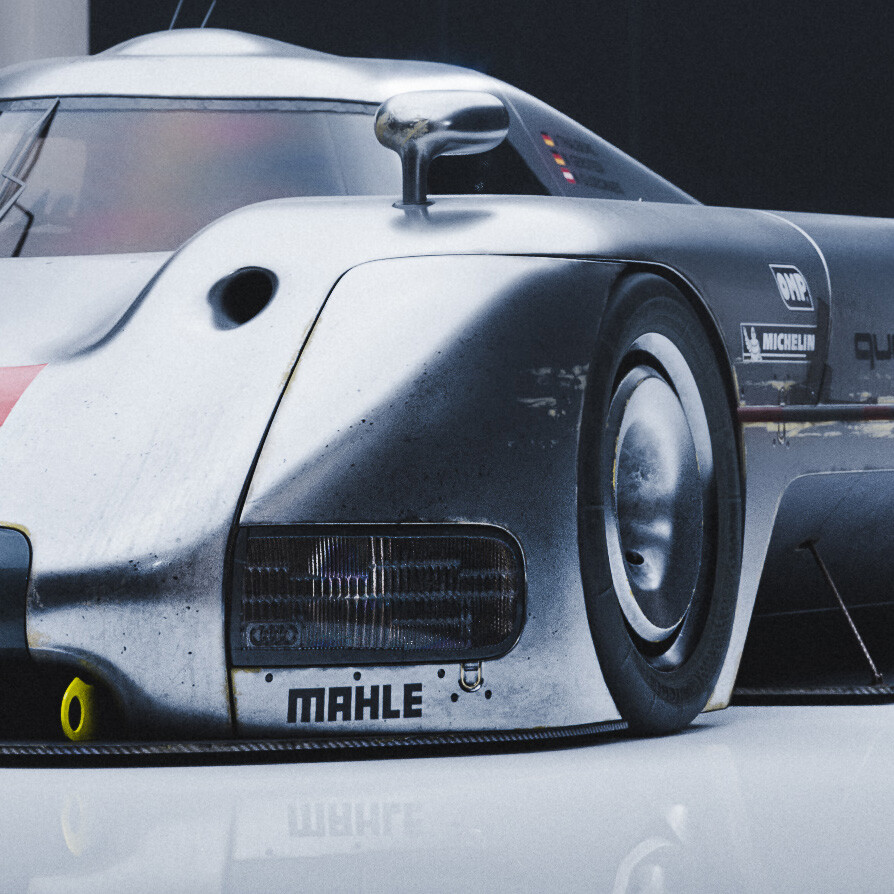
Audi Quattro H
What if Audi tried to build the perfect endurance car in 1993?
The Quattro H project began with a clear goal: to define the future of endurance racing.
The body lines were meant to mantain the airflow as laminar as possible. Naca and ram ducts were used to feed the engine without ruining the aero.
A floating cockpit hosted the pilot. The cell was connected to the main chassis by a heavy duty gasket; this system greatly dampened solicitations to the pilot, allowing the car to be stiffer and lower.
H was short for Heckantrieb, german word for rear wheel drive. The sideskirts hid two driving axles, which had the task of discharging to the ground the torque generated by the diesel power unit. The Quattro H was a 4-rear-wheel-drive to all effects.
Three working prototypes were produced and a simulation of a 24h race was run by 9 pilots at Nürburgring.
All the cars completed the race with no issues.